
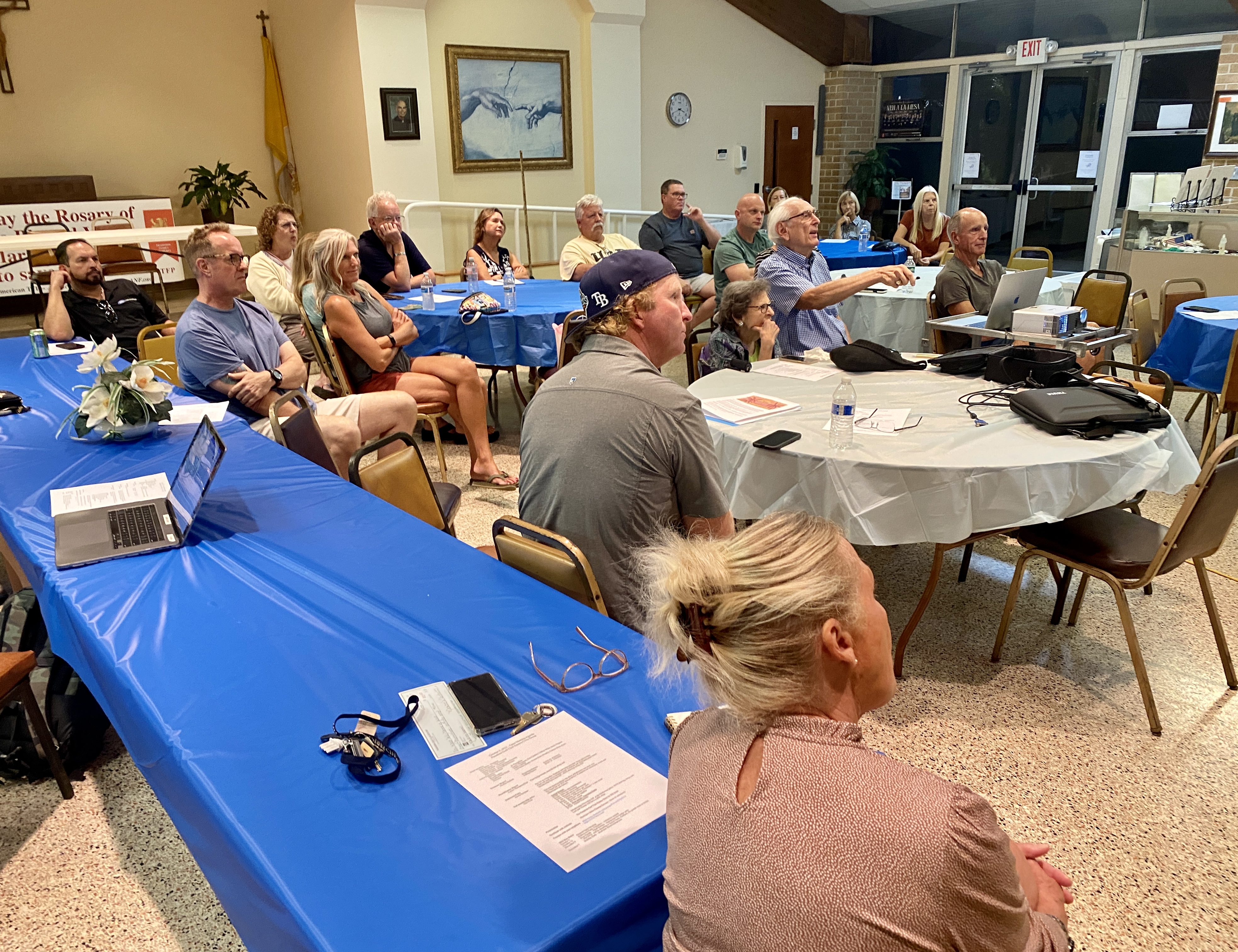
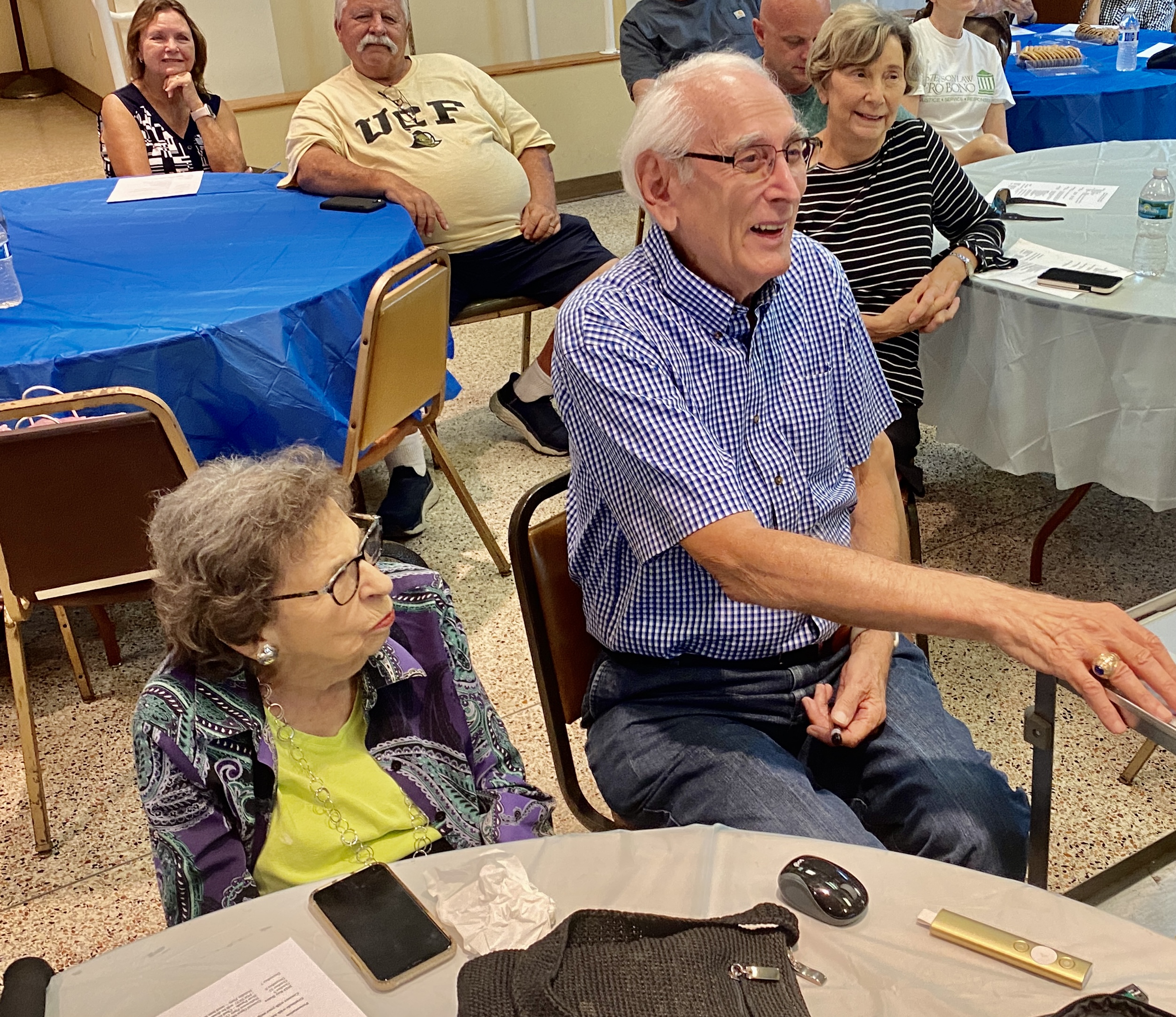
How blessed we are to have Bill and Sally Isreal as our neighbors and some of the longest residents of our Pasadena Golf Club Estates. At our October meeting, Bill told the story of how our neighborhood came to be.
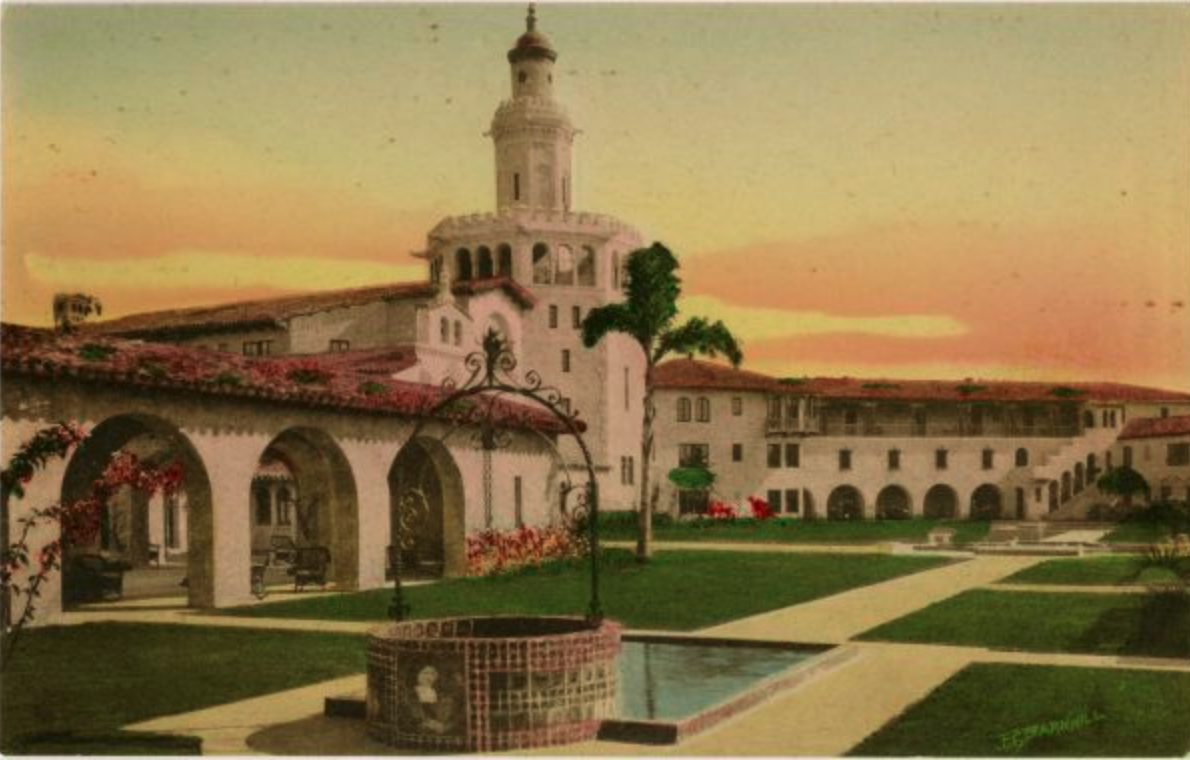
The neighborhood has a connection to the Stetson Law School, which was once the Rolyat Hotel, as “boom hotel” that attracted celebrities of all sorts. When the economy fell, in 1928, the hotel was abandoned. The golf course was essentially a cow pasture.
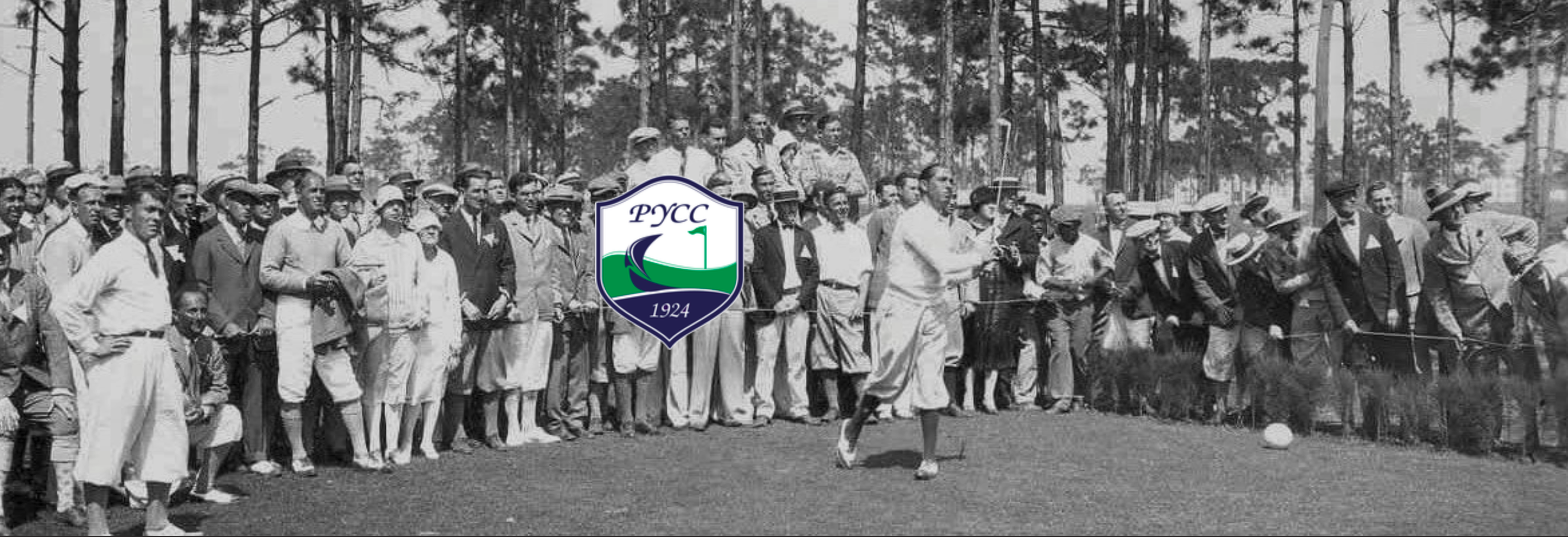
The golf course attracted promotions from golfing greats including Bobby Jones.
The end of Royal Palm, where the condos are now, was once the location of the Golf Clubhouse. The number three hole that you can see from the bridge used to be the 18th hole that of course was near the clubhouse.
Dixie Hollins purchased the land that became our neighborhood during the Great Depression. Hollins was a well-known business leader and supporter of the school system, who owned the golf club through the 1940’s. The neighborhood was developed by his son, Maurice “Rip” Hollins. A former owner of St. Petersburg Printing Co. and Pasadena Golf Club, Mr. Hollins routinely flew each week between St. Petersburg and Citrus County, where he was a major landowner. His Hollinswood Ranch is a 16,500-acre spread the size of the city of Clearwater.
He lived in St. Petersburg between Park Street and Boca Ciega Bay, at a historically significant address in the area where, in 1528, Spanish explorer Pamfilo de Narvaez reputedly became the first white man to set foot on Florida soil.
Maurice LaRue Hollins and Pinellas County were born the same year _ 1912. That was the year that Pinellas was carved out of Hillsborough County, and Mr. Hollins’ father, Dixie Hollins (for whom a high school later was named), became Pinellas County’s first school superintendent.
Some of the streets that exist now including Dolphin Blvd., and Sea Gull Drive were underwater when Hollins bought the property. In 1964, Dolphin Blvd. lots went for about $10,000.
“When World War II broke out I realized, with gas rationing, the golf game was going to become a losing one,” Mr. Hollins once told a newspaper reporter. “So we bought cattle to graze on the golf course” at Pasadena Golf Club. It was intended to be only a stab at ranching. The war wouldn’t last forever, he knew. When peace returned, so would the golfers.
Originally, the homes built in our subdivision had deed restrictions that limited the number of dogs and cats allowable for each house, limited the visibility of clothes hanging on outdoor lines and some members strictly enforced code violations. Over time, the deed restrictions expired and were replaced by county codes.
Starting in 1969, the Civic Group held an “annual cleanup day” which began with a neighborhood parade and then everyone would clean up their property. Neighborhood children joined in and cleaned up curbsides and vacant lots. Even this year, the tradition of a neighborhood cleanup continued when neighbors cleaned up hurricane debris on the bridge.
Hurricane Gladys (October 1968) backed up storm sewers similar to what we saw in the latest hurricane. A tornado (1981) destroyed a catamaran in our community. Bill Isreal reported that since 1962, the Civic Group has been involved in battling development issues that involve streets, sewers and fire protection. One of the most important movements involved the repair of the storm sewer drainage improved at the end of Royal Palm Dr S. in 2003. As you know, that continues to be a challenge. When the neighborhood was built, it used septic tanks.
In 1991, the civic group took a vote that resulted in the installation of street lights, which some neighbors opposed because they wanted to be able to clearly see the stars in the dark sky. Another improvement, sparked by the civic group, greatly improved flood problems in 1998.
In 1969, there was a proposal to build a massive 2,200 high-rise apartments on an island that would be created in Boca Ciega Bay. The battle resulted in a state law that would eventually outlaw drudge and fill projects like the one that was proposed.
The civic group was first organized mainly over the issue of fire protection. From 1953-2013 individual property owners contracted with either South Pasadena or Gulfport for fire protection. In 1979, a fire claimed three lives at a Robin Road home and the confusion over who was responsible for answering the call delayed a response. That tragedy resulted in South Pasadena alone covering the neighborhood with fire protection. From 1993-2013 we were in the South Pasadena fire district. In 2013, the Pinellas County Commission awarded the coverage contract to the City of St. Petersburg. However, South Pasadena is still our first responders. The change dramatically reduced the cost of fire coverage insurance. (This is just one small example of how your civic group works on your behalf to save significant money.)
Annexation is a constant issue for our community. In 1981, USX (U.S. Steel) annexed all undeveloped land and the golf course into Gulfport. The PGCECG tried to intervene in the annexation but was not allowed. USX planned to build high-rise condos. In 1988, people on Dolphin Blvd came home to find the street blocked off by a developer who planned to build apartments at the intersection of Debbie Lane and Dolphin. At various times, the neighborhood has been in conversation with South Pasadena and with Gulfport to consider the pros and cons of annexation.
Some of you travel over the bridge to Dolphin and might recall that prior to 1991, flood water would occasionally make the bridge impassable. The civic group worked with the country to raise the flood wall and improve the bridge to prevent flooding.
The rich history that Bill Isreal described at our October meeting teaches a few lessons. One lesson is about the power of a civic group, neighbors standing up for each other. A second lesson is about what happens when neighbors look after each other and take community pride in our properties and we all learned from Bill and Sally that one of our greatest life legacies is to keep our community as what President Scott Steiss describes as “our little sliver of paradise.” The work we do together to protect and improve our community will outlive us all. In so many ways, we are the beneficiaries of the work of people like Bill and Sally Isreal and other leaders of our civic group through the ages.
 33707news.com