
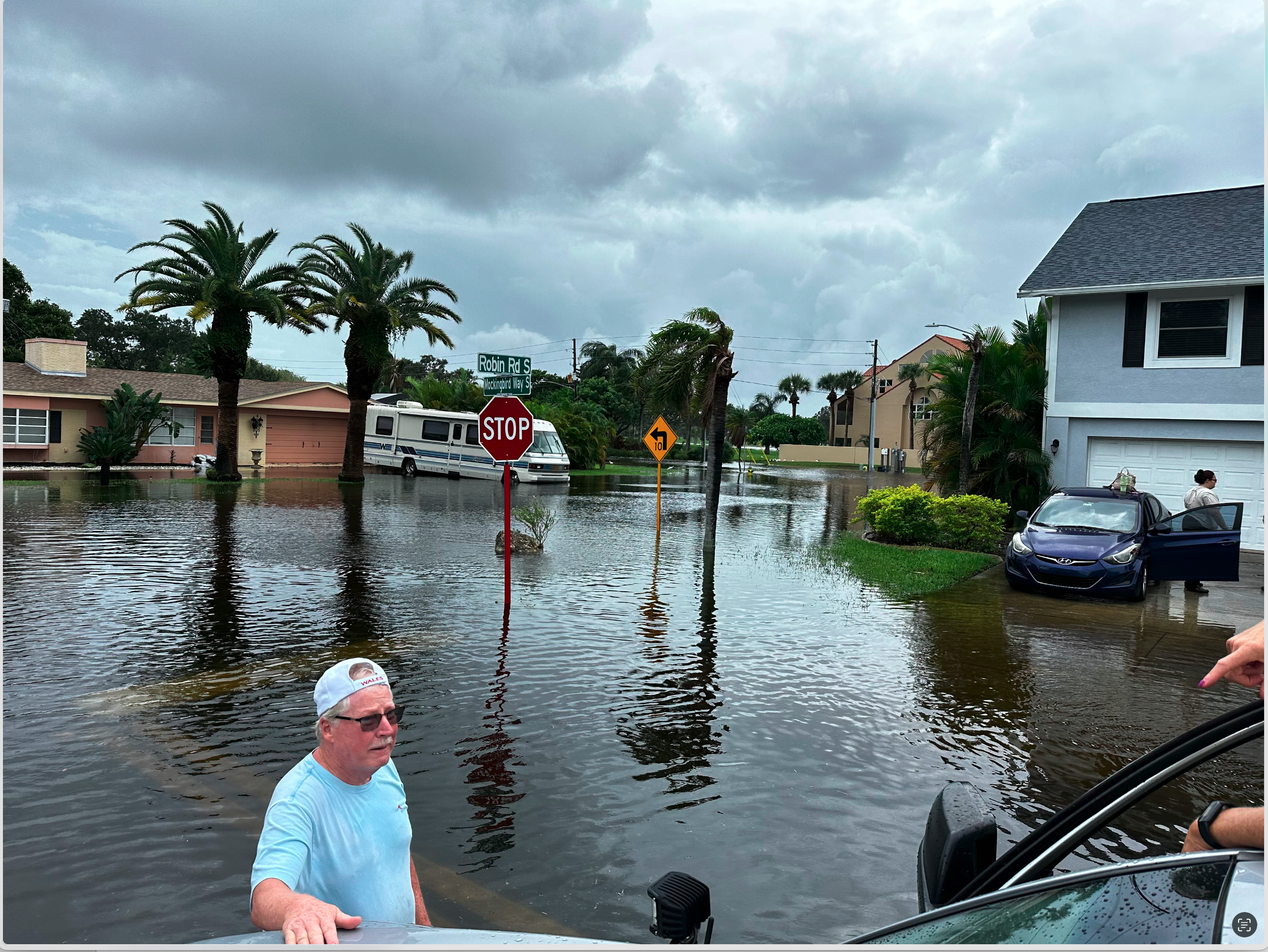
First of all, we in this neighborhood look out for each other, especially during hurricane season, which starts officially June 1st, but in recent years we have seen some tropical activity in May and the 2024 season is cooking up some angst.
The Tampa Bay Times points out:
Ocean waters are record hot.
In fact, water temperatures in key areas are currently running at levels you normally wouldn’t see until July.
The Gulf of Mexico is starting to heat up, too, with sea surface temperatures recently hitting 80 degrees for the first time this year.
So that’s not great. Hurricanes thrive in warmer water. Plus we’re moving from an El Niño pattern to a La Niña. While El Niño is good for us because it tends to tear storms apart, La Niña is the opposite, it feeds storm development.
Colorado State University, which has a renowned tropical prediction center and has been releasing forecasts for nearly 30 years, is predicting 11 hurricanes this season. That’s the most they have ever predicted in their early forecast. The previous high was nine. So this hurricane season could be historic.
Four of the earliest Atlantic hurricanes have occurred in this century and keep in mind, we are only 24 years into this century.

Over a typical 2-year period, the U.S. coastline is struck by an average of 3 hurricanes, 1 of which is classified as a major hurricane (winds of 111 mph or greater).
2023 was a fairly quiet year and even a quiet year can cause problems. Idalia slammed into the Big Bend area of Florida after a period of rapid intensification. While the storm’s center stayed about 100 miles offshore of Tampa Bay, it still managed to flood vulnerable, low-lying areas, like the Shore Acres neighborhood in St. Petersburg. Our neighborhood took on some flooding too, but damage was minimal.
Florida’s Disaster Preparedness Sales Tax Holiday: June 1 – 14 and August 24 – September 6, 2024.
A list of items that are exempt from tax during the sales tax holiday includes:
- A portable generator used to provide light or communications or preserve food in the event of
a power outage with a sales price of $3,000 or less - A tarpaulin or other flexible waterproof sheeting with a sales price of $100 or less
- An item normally sold as, or generally advertised as, a ground anchor system or tie-down kit
with a sales price of $100 or less - A smoke detector or smoke alarm with a sales price of $70 or less
- A fire extinguisher with a sales price of $70 or less
- A carbon monoxide detector with a sales price of $70 or less
- A nonelectric food storage cooler with a sales price of $60 or less
- A portable power bank with a sales price of $60 or less
- A gas or diesel fuel tank with a sales price of $50 or less
- A portable self-powered radio*, two-way radio, or weather-band radio with a sales price of
$50 or less - A package of AA-cell, AAA-cell, C-cell, D-cell, 6- volt, or 9-volt batteries, excluding automobile
and boat batteries, with a sales price of $50 or less - A portable self-powered light source* (powered by battery, solar, hand-crank or gas) with a
sales price of $40 or less
o Flashlights
o Lanterns
o Candles - Eligible light sources and radios qualify for the exemption even if electrical cords are included in the purchase.
- Common household consumable items with a sales price of $30 or less. For purposes of this
exemption, common household consumable items means:
o Laundry detergent and supplies
➢ Powder, liquid, or pod detergent
 33707news.com