
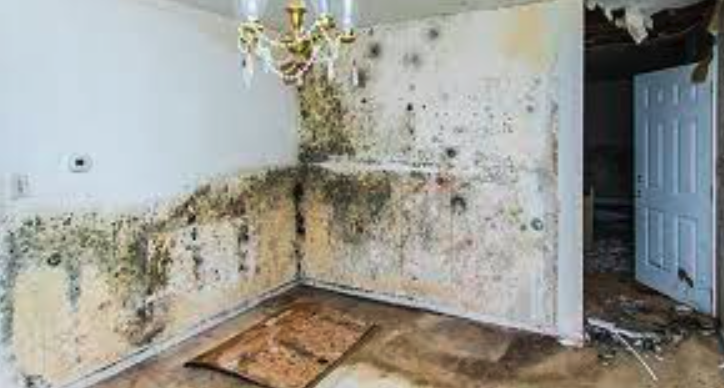
The next threat to wet homes in our neighborhood is mold. The key to mold control is moisture control.
If you were not able to dry your home (including furniture and other items) within 24-48 hours, you should assume you have mold growth. You need to completely dry everything, clean up
the mold, and make sure you don’t still have a moisture problem.
You may see or smell mold on clothing, drywall, furniture, cardboard boxes, or books, but it may also be hidden under or behind items like carpet, cushions, or walls.
Every family has different circumstances that can affect this decision. The EPA recommends waiting until the house is completely dried out and there is no visible evidence of mold. If damage is minor, some families may be able to return sooner or even remain in the house while repairs are made. Health issues may require others to stay away until remediation has been completed and then hire a professional mold inspector to test the house for mold before returning.
MOLD BASICS: HOW MOLDS CAN AFFECT YOUR HEALTH
Exposure to mold can lead to asthma attacks, eye and skin irritation, and allergic reactions. It can lead to severe infections in people with weakened immune systems. Avoid contaminated buildings and contaminated water as much as you can. Flood water may have carried sewage or chemicals
into your home. This could expose you or your family to viruses, bacteria, disease carriers (such as mosquitos), and parasites, as well as mold. To learn more about cleaning and disinfection go
to: http://www.cdc.gov/healthywater/emergency/ flood/standing.html
Always follow the manufacturers’ instructions for use (see product label). Use a stiff brush on rough surface materials such as concrete.
BEFORE YOU ENTER ANY MOLDY SITE:
• Protect yourself and loved ones against hazards. People with breathing problems like asthma or who have weakened immune systems should stay away from moldy sites. Children should not take part in disaster cleanup work. Check for loose power lines or gas leaks. Make sure the electricity and gas are turned off. Look for sagging ceilings or floors or other structural problems. Watch out for wet, muddy, or slippery floors.
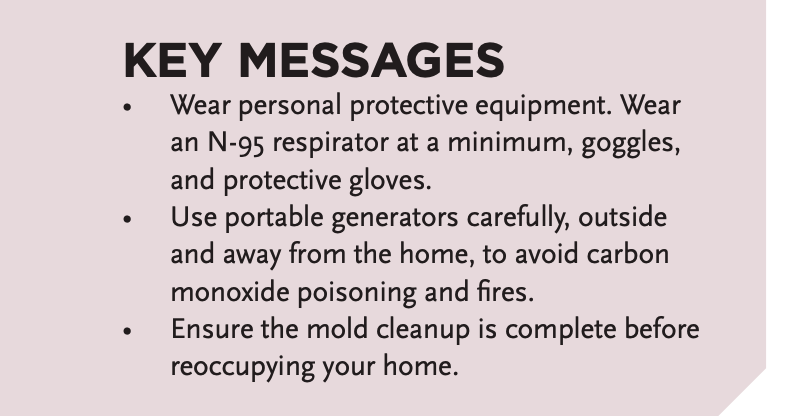
• Protect your mouth and nose against breathing in mold: wear at least an N-95 respirator. If you plan to spend a lot of time removing moldy belongings or doing work like ripping out moldy drywall, wear a half-face or fullface respirator. Basic information on using it is in OSHA’s general respiratory protection guidance.
• Protect your skin. Wear protective gloves (non-latex, vinyl, nitrile, or rubber). Do not touch mold or moldy items with bare hands.
• Protect your eyes. Wear goggles that provide complete eye protection. Choose goggles designed to keep out dust and small particles. Safety glasses or goggles that have open vent holes will not protect you against dust and small particles.
How to clean
To remove mold growth from hard surfaces use commercial products, soap and water, or a bleach solution of no more than 1 cup of household laundry bleach in 1 gallon of water.
If you choose to use bleach to remove mold:
- Never mix bleach with ammonia or other household cleaners. Mixing bleach with ammonia or other cleaning products will produce dangerous, toxic fumes
- Open windows and doors to provide fresh air. Use fans to dry out the building. Position fans to blow air out doors or windows.
- Wear non-porous gloves and protective eyewear.
- If the area to be cleaned is more than 10 square feet, consult the U.S. Environmental Protection Agency (EPA) guide
- Always follow the manufacturer’s instructions when using bleach or any other cleaning product.
When in doubt, take it out!
Remove all porous items that have been wet for more than 48 hours and that cannot be thoroughly cleaned and dried. These items can remain a source of mold growth and should be removed from the home.
Porous, noncleanable items include carpeting and carpet padding, upholstery, wallpaper, drywall, floor and ceiling tiles, insulation material, some clothing, leather, paper, wood, and food.
Removal and cleaning are important because even dead mold may cause allergic reactions in some people.
To prevent mold growth, clean wet items and surfaces with detergent and water.
Homeowners may want to temporarily store items outside of the home until insurance claims can be filed. See recommendations by the Federal Emergency Management Agency (FEMA)external icon.

Am I done?
• If you still see or smell mold, you have more work to do. After remediation, there should be no signs of water damage or mold growth.
• You may need to ask a mold remediation professional to know whether your mold problem is completely fixed. As noted in the “Should I do this myself?” section, sampling for mold is not usually recommended; instead, a careful inspection of the work area for completion of the cleanup and absence of mold-related odors is usually appropriate.
• If you have health problems that get worse when you return home, like asthma or allergy attacks or skin or eye irritation, you may still have some mold.
 33707news.com